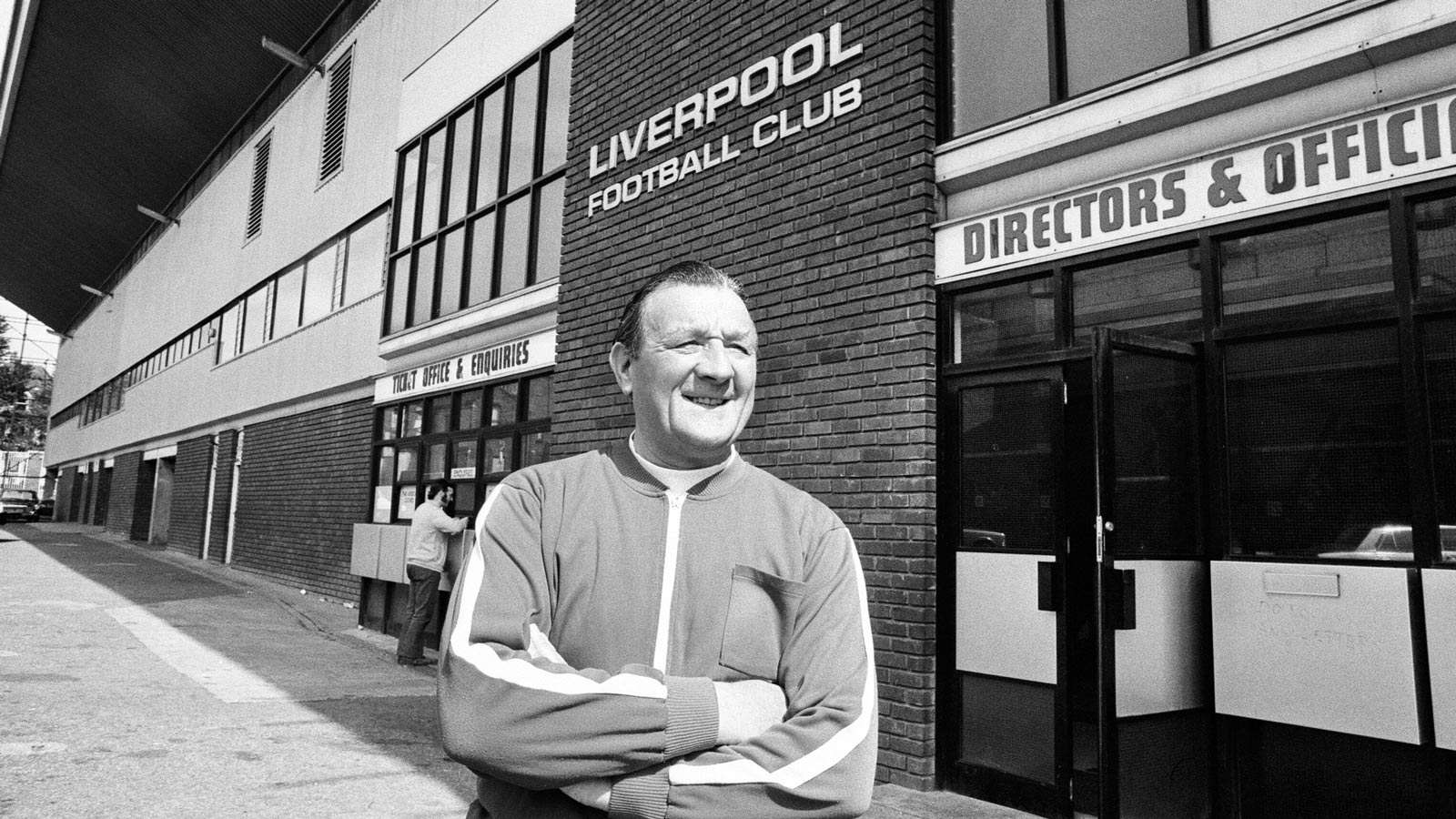
Bob Paisley’s journey to becoming the most successful manager in Liverpool’s history is one of football’s most extraordinary and understated stories.
Unlike many modern icons of the game, Paisley was never driven by fame or attention. Instead, his legacy was built through quiet brilliance, tactical intelligence and an unparalleled understanding of what it took to win.
Born in 1919 in Hetton-le-Hole, County Durham, Paisley’s playing career began with Bishop Auckland before he joined Liverpool as a player in 1939. His early years at Anfield were interrupted by the outbreak of the Second World War, during which he served in the British Army. Upon returning, Paisley became an important figure within the club, both on and off the pitch, eventually transitioning into coaching and scouting roles.
It was under Bill Shankly that Paisley truly began to shape Liverpool’s future. As part of the famous “Boot Room” staff, he played a crucial role in Liverpool’s rise from the Second Division to domestic dominance in the 1960s and early 1970s. While Shankly was the charismatic leader, Paisley was the tactical brain, meticulously analysing opponents and refining Liverpool’s style of play.
In 1974, Paisley was appointed Liverpool manager following Shankly’s shock retirement. Many doubted whether such a reserved figure could fill Shankly’s shoes, but Paisley quickly proved he was more than capable. What followed was a nine-year reign that would redefine success in English football.
Between 1974 and 1983, Paisley led Liverpool to an astonishing 20 major trophies, including six First Division titles, three European Cups, three League Cups and one UEFA Cup. He became the first manager in history to win the European Cup three times, establishing Liverpool as the dominant force in European football.
Paisley’s genius lay in his ability to build and rebuild. He oversaw the evolution of Liverpool’s greatest teams, signing and developing legendary players such as Kenny Dalglish, Graeme Souness, Alan Hansen, Phil Neal and Ian Rush. His recruitment was precise, his tactics flexible, and his man-management exceptional.
Despite his success, Paisley remained famously humble. He avoided the media spotlight, preferring to let his teams speak for him on the pitch. Players often described him as calm, fatherly and deeply respected, a man whose authority came from knowledge rather than ego.
Paisley retired in 1983, handing over the reins to Joe Fagan, who continued Liverpool’s success by winning the European Cup in his first season. By the time Paisley stepped away, he had created not just a winning team, but a winning culture that would define Liverpool for generations.
In 2020, a statue of Bob Paisley was unveiled outside Anfield, standing between Bill Shankly and Kenny Dalglish — a symbolic recognition of his place in Liverpool’s greatest triumvirate. For many supporters and historians, Bob Paisley is not only Liverpool’s greatest manager, but one of the most influential figures the sport has ever seen.
Bob Paisley’s managerial honours
- European Cup (3) – 1977, 1978, 1981
- UEFA Cup (1) – 1976
- European Super Cup (1) – 1977
- First Division (6) – 1975-76, 1976-77, 1978-79, 1979-80, 1981-82, 1982-83
- League Cup (3) – 1981, 1982, 1983
- FA Charity Shield (4) – 1976, 1979, 1980, 1982